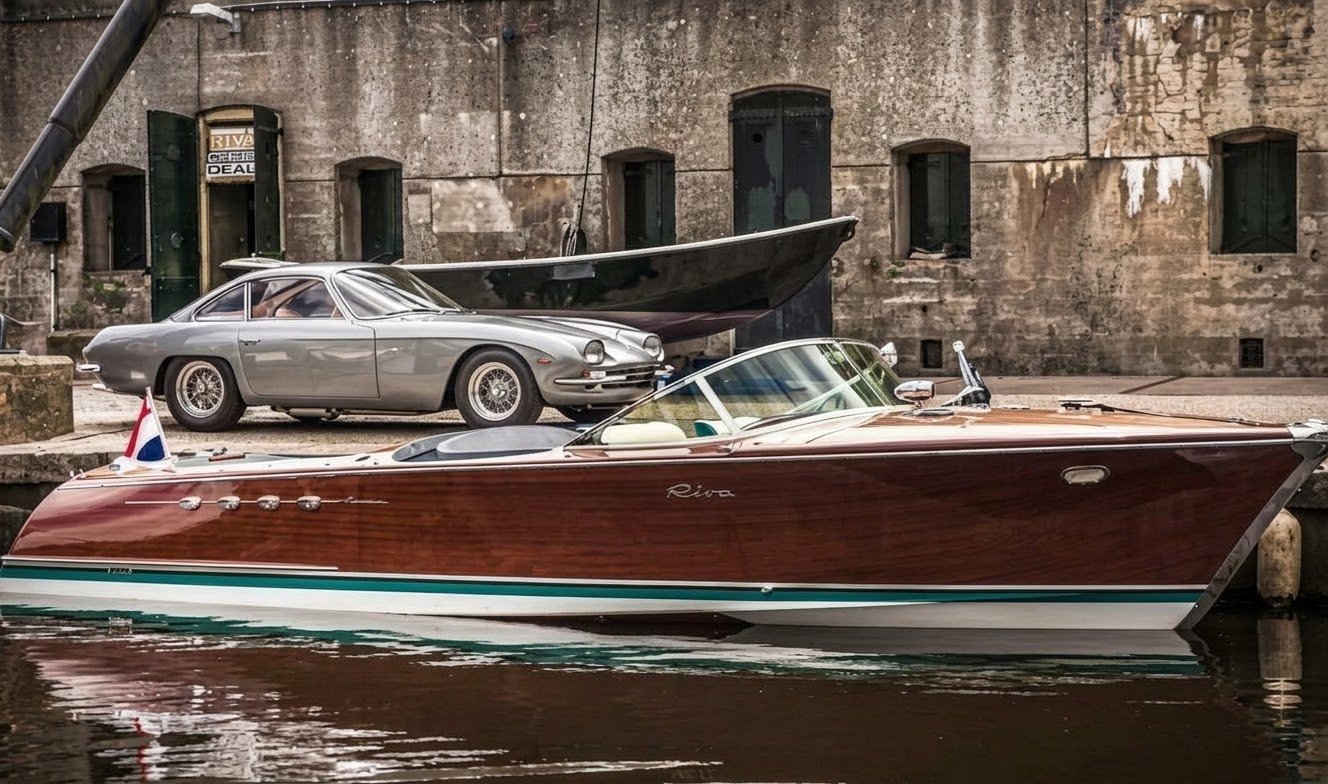
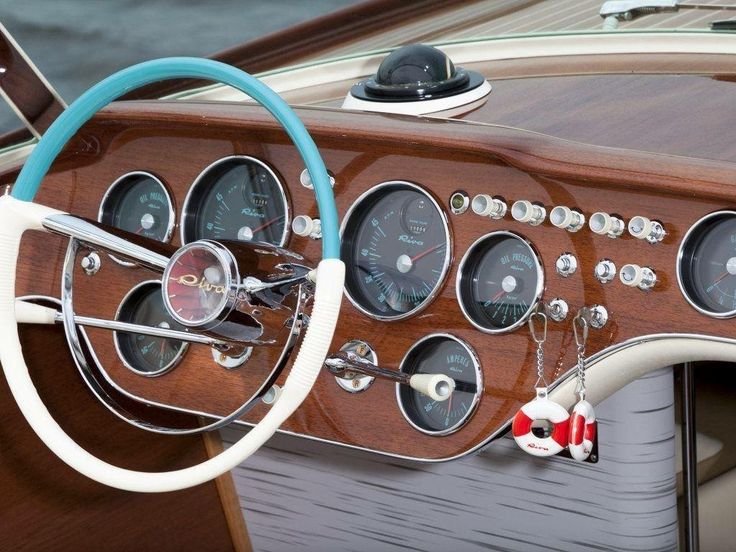
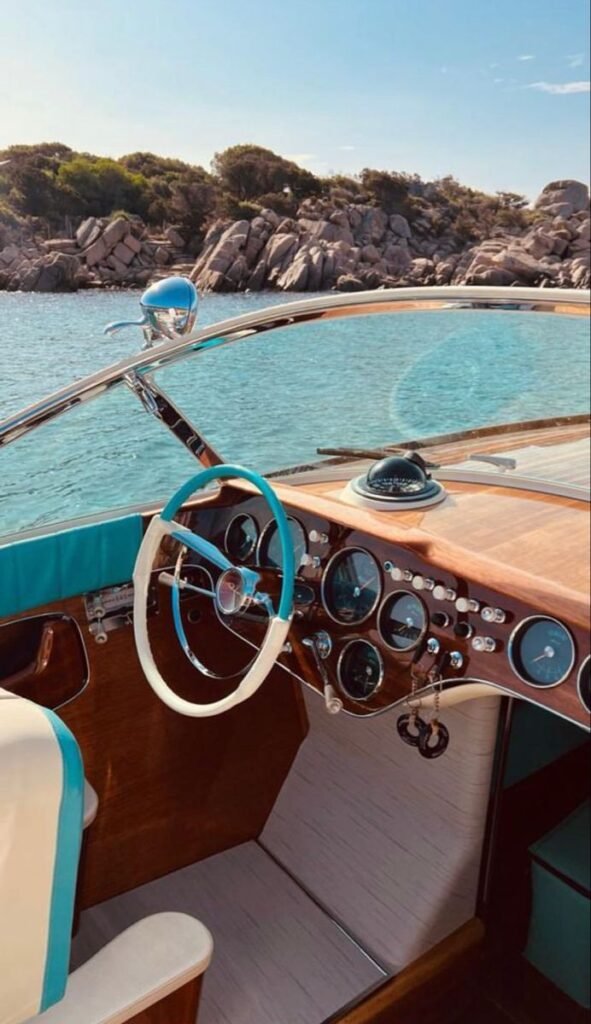
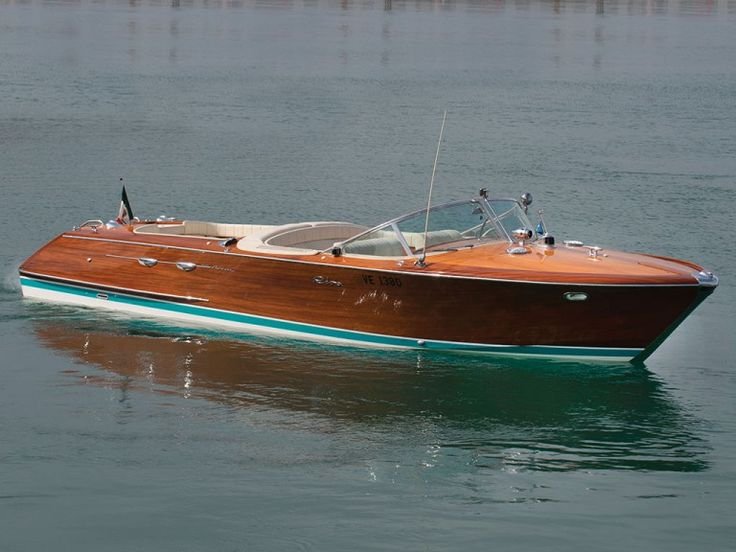
There are plenty of outrageous machines in Lamborghini’s history, but few are as extraordinary as the Riva Aquarama Lamborghini. At first glance, it looks like an elegant Italian wooden speedboat from the 1960s. Look beneath the beautifully finished mahogany deck, however, and you will find something far more outrageous: two Lamborghini V12 engines producing a combined output of approximately 700 horsepower.
And the man behind this extraordinary creation was none other than Ferruccio Lamborghini himself.
A LUXURY SPEEDBOAT WITH A LAMBORGHINI HEART
Built in 1968, the one-off boat, identified as Riva hull number 278, was commissioned by Ferruccio Lamborghini, who wanted something more powerful than a standard Aquarama.
At the time, the Riva Aquarama was already one of the most prestigious luxury speedboats in the world. Known for its handcrafted wooden construction, elegant styling, and impressive performance, it was the marine equivalent of a high-end Italian grand tourer.
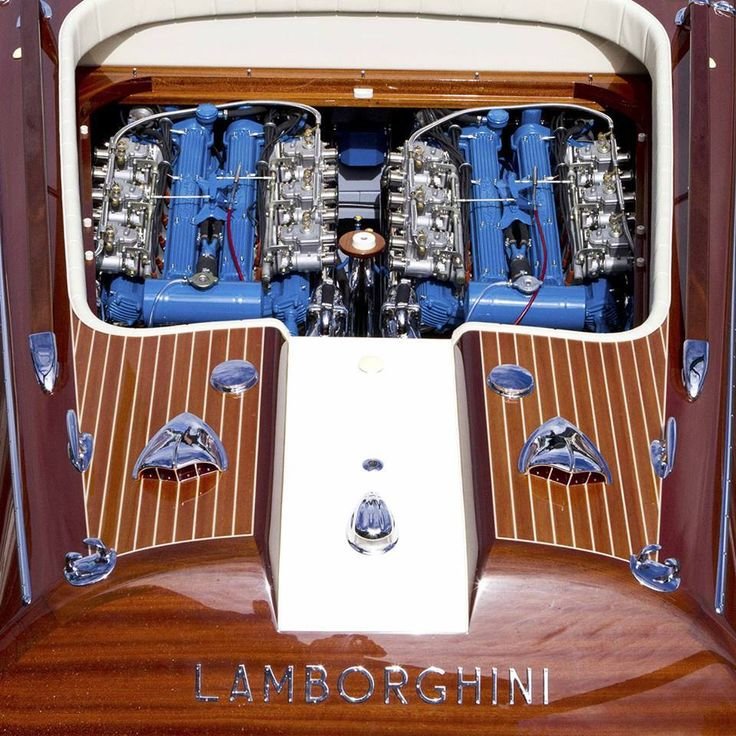
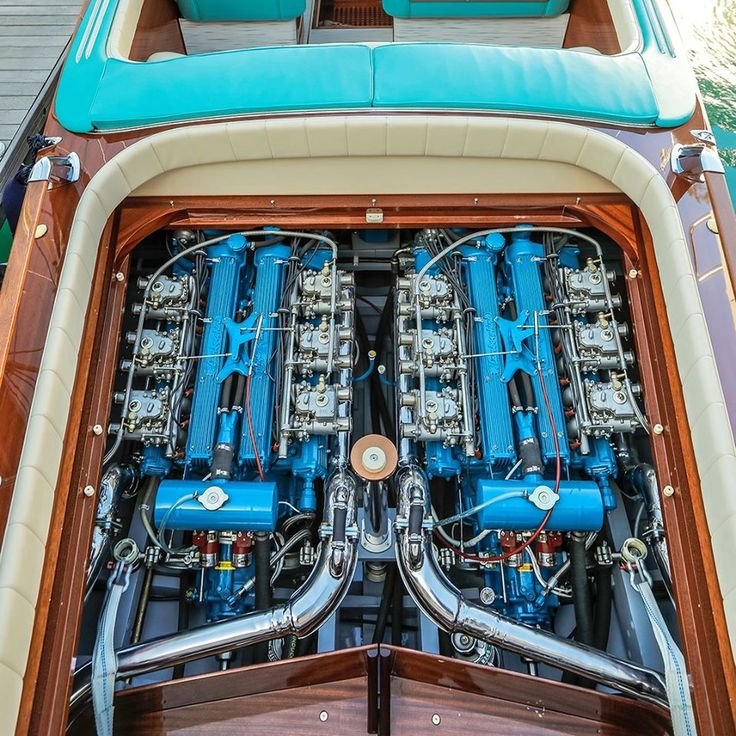
Ferruccio, however, had a different idea. Rather than settling for the boat’s conventional powertrain, he requested two 4.0-liter V12 engines derived from the Lamborghini 350 GT.
The result was an extraordinary combination of Italian craftsmanship and mechanical excess: a mahogany speedboat powered by the same type of engine architecture that helped establish Lamborghini as a serious force in the supercar world.
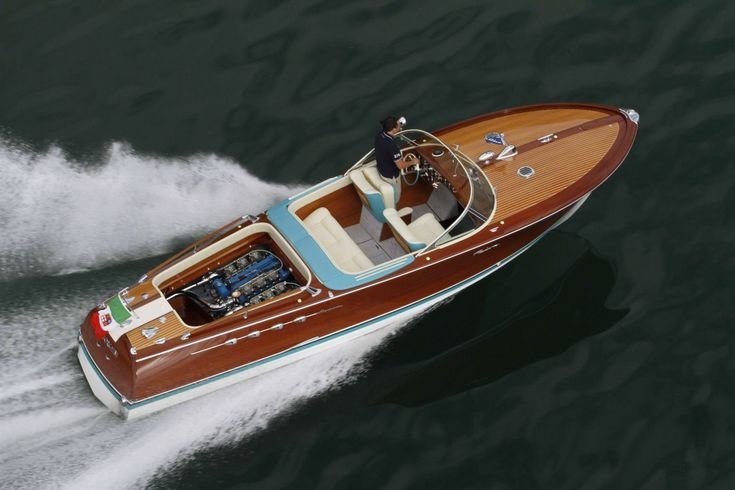
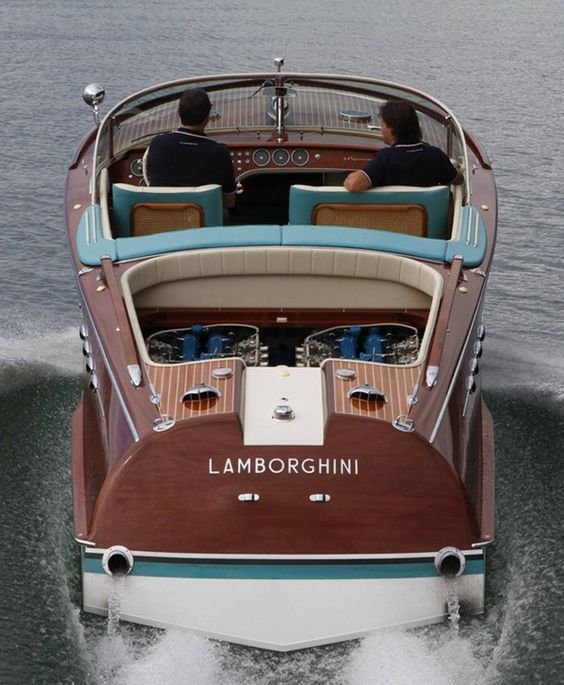
TWO V12 ENGINES, APPROXIMATELY 700 HORSEPOWER
Each naturally aspirated 4.0-liter V12 produced approximately 350 horsepower. Together, the engines delivered around 700 horsepower, giving the Aquarama considerably more muscle than its standard counterparts.
Riva Aquarama Lamborghini — Key Specifications
- Year: 1968
- Hull number: 278
- Length: 8.45 metres
- Beam: 2.60 metres
- Powertrain: Two Lamborghini 4.0-liter V12 engines
- Combined output: Approximately 700 hp
- Induction: Twin-Weber carburetors, with six carburetors per engine
- Reported top speed: Approximately 48 knots (89 km/h)
- Construction: Handcrafted mahogany hull and deck
Installing two automotive V12 engines into a speedboat was far from a simple engine swap. The powertrain required extensive modifications to operate reliably in a marine environment, including adaptations to the cooling system and other engine components.
The engines were also configured to rotate in opposite directions, helping counteract the handling effects associated with propeller rotation.
With a reported top speed of around 48 knots, the boat became widely known as the fastest Riva Aquarama ever built.
And then there was the soundtrack. Imagine two carbureted Lamborghini V12s roaring behind you as the boat cuts across the water. It is a spectacular meeting of supercar engineering and classic Italian boating.
FROM FERRUCCIO LAMBORGHINI TO A MISSING PIECE OF HISTORY
Ferruccio Lamborghini kept the boat for more than two decades before selling it to his friend Angelo Merli in July 1988.
Over time, maintaining the twin Lamborghini V12s became increasingly expensive. The original engines were eventually removed and replaced with conventional V8 units, while the V12s were kept separately.
Following Merli’s death in 1993, the boat gradually faded from public view. For years, its whereabouts remained largely unknown, leaving one of the most unusual machines associated with Ferruccio Lamborghini in danger of being forgotten.
That changed in 2010, when Dutch Riva collector Sandro Zani located the boat in Italy. It was reportedly sitting beneath a tarp and had deteriorated considerably.
Despite its neglected condition, the discovery was remarkable. Reports about the find noted that the original sales invoice signed by Ferruccio Lamborghini was still inside the boat.
What had once been a unique symbol of Italian luxury and excess was now a restoration project of considerable historical importance.
A THREE-YEAR RESTORATION BRINGS THE V12s BACK
The restoration was undertaken by Riva-World in Uithoorn, the Netherlands, and took approximately three years.
The craftsmen repaired and refinished the mahogany structure, restored the chrome hardware, rebuilt the dashboard and controls, and recreated the distinctive white-and-turquoise upholstery.
The wooden surfaces received approximately 25 coats of varnish, helping restore the deep, glossy finish that made the Aquarama famous.
The biggest challenge was bringing back its defining feature: the twin Lamborghini V12 powertrain.
Because the original engines were no longer available for installation, two other Lamborghini 4.0-liter V12 engines were sourced and extensively adapted for marine use. Specialists used the original configuration as a reference, recreating the necessary components to reproduce the boat’s distinctive mechanical setup.
The restoration also involved expertise from people familiar with Lamborghini and Riva’s history, helping ensure that the finished boat remained faithful to Ferruccio’s original vision.
After the work was completed, the Aquarama returned to the waters of Lake Iseo, where it was tested and inspected by specialists familiar with its history.
A ONE-OFF MACHINE THAT MONEY CANNOT EASILY REPLICATE
Today, the Riva Aquarama Lamborghini stands as a remarkable piece of both automotive and maritime history. It represents an era when Italian engineering, craftsmanship, and a willingness to push boundaries could produce something truly unconventional.
Its significance goes beyond the 700-horsepower figure. The boat brings together two legendary names: Riva, renowned for its handcrafted luxury speedboats, and Lamborghini, famous for its high-performance engines and extravagant supercars.
The restored boat has been associated with Bellini Nautica’s Riva collection in Clusane, near Lake Iseo, where it has appeared at special events and demonstrations.
Unlike a production supercar, this Aquarama cannot simply be ordered from a showroom. It is a one-off creation tied directly to Ferruccio Lamborghini’s personal taste and the craftsmanship of a bygone era.
Ferruccio Lamborghini did not need a 700-hp speedboat. That is precisely what makes it so brilliant.
The Riva Aquarama was already an icon of luxury, but Ferruccio took the concept to another level by giving it the heart of a Lamborghini supercar. The result is a machine that combines elegant wooden craftsmanship with the unapologetic excess of two naturally aspirated V12 engines.
Today, the automotive world is increasingly focused on electrification, efficiency, and digital technology. The Aquarama Lamborghini is a reminder of a different philosophy: sometimes, engineering is also about creating something outrageous simply because you can.
Would you choose this twin-V12 Riva Aquarama over a classic Lamborghini road car? Share your thoughts in the comments.

Adhe is part of the 88 Eight Box Editorial Team, covering JDM culture, motorsport, automotive technology, and industry news. The team focuses on delivering original automotive stories, reviews, and insights for enthusiasts worldwide.