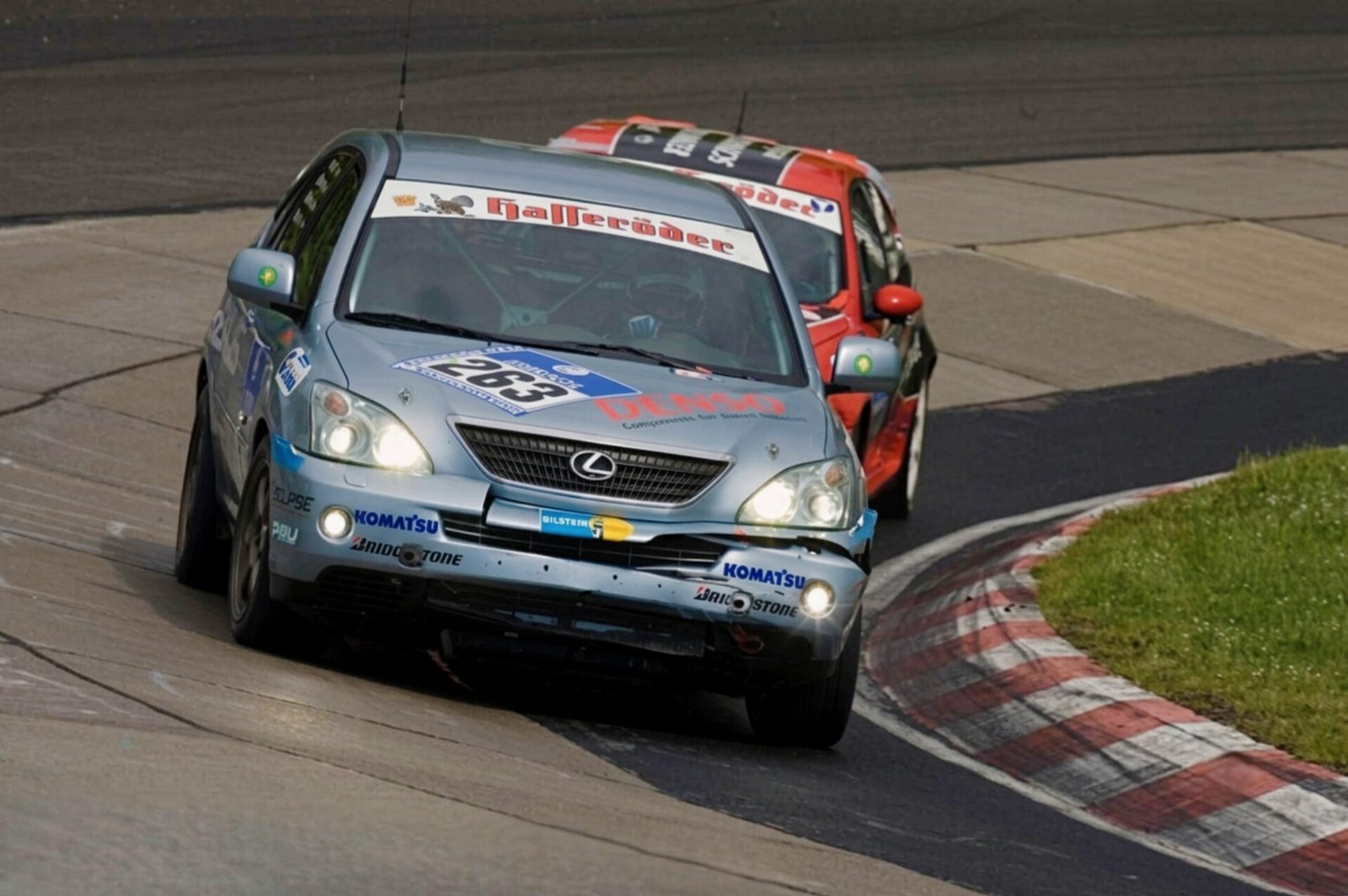
Long before hybrid technology became a familiar sight in motorsport, Lexus was already throwing one of its hybrid SUVs into one of the toughest endurance races on the planet.
At the 2005 24 Hours of Nürburgring, officially known as the 33rd ADAC Zürich 24h-Rennen, Lexus entered a production-based Lexus RX 400h and put its hybrid technology through an extreme 24-hour test around the Nürburgring Nordschleife.
The car, carrying race number #263, was entered by NPO MOTO-CP with technical support from Toyota and Lexus engineers.
More importantly, the RX 400h became the first production hybrid vehicle to complete a major 24-hour endurance race.
A HYBRID SUV ON THE NÜRBURGRING
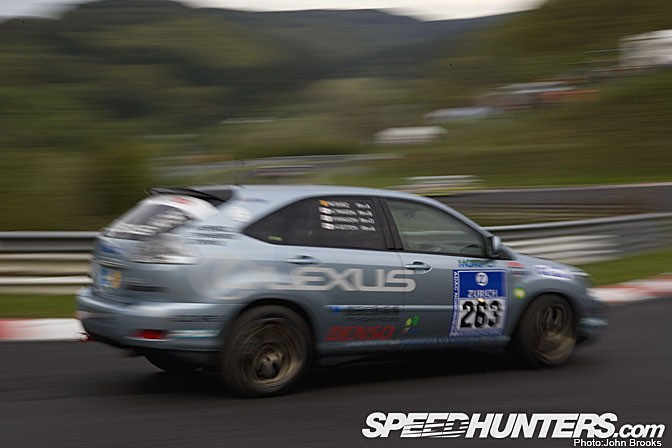
The RX 400h wasn’t there simply to chase an overall victory.
Instead, the project was designed as a real-world stress test for Lexus Hybrid Drive, putting the hybrid powertrain through conditions that were far more demanding than normal road driving.
The Nürburgring Nordschleife was the perfect torture test.
Its combination of high-speed corners, dramatic elevation changes, bumps and unpredictable conditions places enormous demands on a car’s engine, transmission, brakes, cooling system and drivetrain.
Behind the wheel of the RX 400h were Belgian driver Marc Duez, alongside Japanese drivers Kanami Takeda, Yasushi Kikuchi and Hitoshi Gotoh.
The Lexus competed in the S1 class for alternative-fuel vehicles.
In qualifying, the RX 400h recorded a 11:42.812 lap, placing it 195th overall.
But qualifying pace wasn’t really the point.
107 LAPS AND 2,715 KILOMETERS
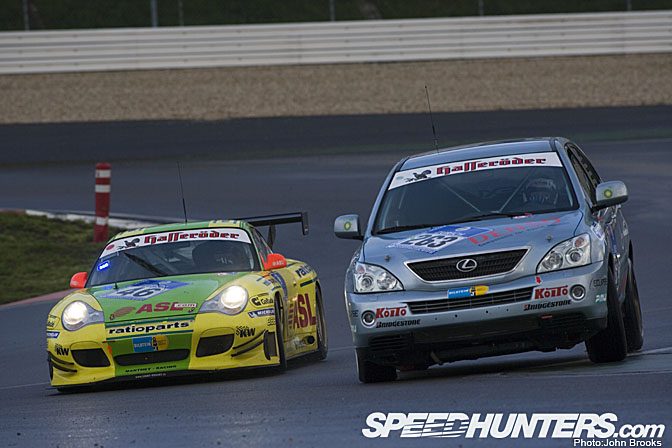
Once the race started, the RX 400h faced the real challenge.
The Lexus suffered damage following an incident early in the race, but the team managed to repair the car and send it back onto the track.
After 24 hours of racing, the hybrid SUV had completed 107 laps, covering approximately 2,715 kilometers (1,687 miles).
It finished 79th overall from 218 starters, with 133 cars officially classified as finishers.
In the S1 class, the RX 400h finished 13th.
Those numbers might not sound particularly impressive when compared with the outright winners.
But that wasn’t what Lexus was trying to prove.
The real achievement was getting a production-based hybrid SUV through a full 24-hour endurance race at the Nürburgring while collecting valuable data about how its hybrid system performed under extreme loads.
A RACE CAR THAT WAS REALLY A LABORATORY

The Nürburgring project gave Toyota and Lexus an opportunity to test their hybrid technology in conditions that could never be fully replicated in a laboratory.
For 24 hours, the RX 400h had to deal with continuous acceleration, braking, cornering, temperature changes and mechanical stress.
The data collected from the project would contribute to Toyota and Lexus’ subsequent hybrid motorsport development, including the Lexus GS 450h program in 2006 and Toyota’s eventual expansion into hybrid endurance racing.
That development would later lead toward Toyota’s much larger presence in the FIA World Endurance Championship and the 24 Hours of Le Mans.
Looking back, the RX 400h may seem like an unlikely racing machine.
It wasn’t a lightweight prototype. It wasn’t built purely for competition. It was a hybrid SUV that looked more at home carrying a family and luggage than attacking the Nürburgring.
And that’s exactly what makes the story so interesting.
In 2005, Lexus was essentially asking a very simple question: Could hybrid technology survive 24 hours of punishment on one of the world’s most demanding racetracks?
The RX 400h answered that question by completing the race.
The most interesting part of this story isn’t the RX 400h’s finishing position. It’s the fact that Lexus was willing to use a production-based hybrid SUV as a rolling laboratory at the Nürburgring.
Today, hybrid technology is deeply connected with high-performance motorsport, but projects like this show that the road to modern hybrid racing started with much more unconventional experiments.
The RX 400h wasn’t the fastest car at the Nürburgring in 2005. It didn’t need to be.
It simply had to survive and it did.
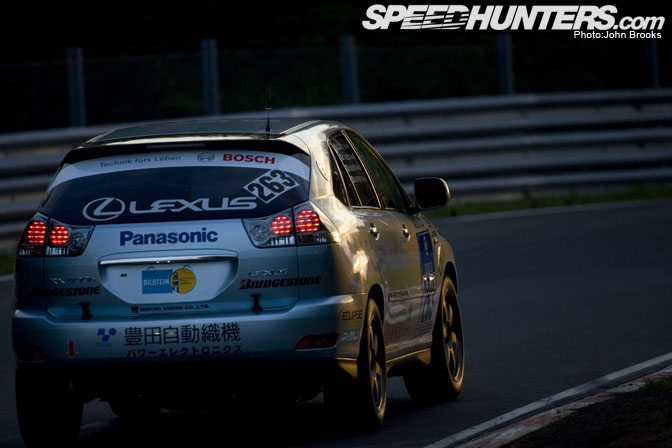
What do you think about Lexus putting a hybrid SUV through the Nürburgring 24 Hours back in 2005? Was this a brilliant piece of engineering development, or just one of the strangest race-car experiments ever? Let us know your thoughts in the comments.

Adhe is part of the 88 Eight Box Editorial Team, covering JDM culture, motorsport, automotive technology, and industry news. The team focuses on delivering original automotive stories, reviews, and insights for enthusiasts worldwide.