When Cadillac luxury met Italian high fashion, the result was one of the strangest and most fabulous American cars of the 1970s. Meet the Cadillac Seville by Gucci.
Long before fashion houses started turning ordinary cars into rolling billboards for luxury, Gucci was already experimenting with the automobile.
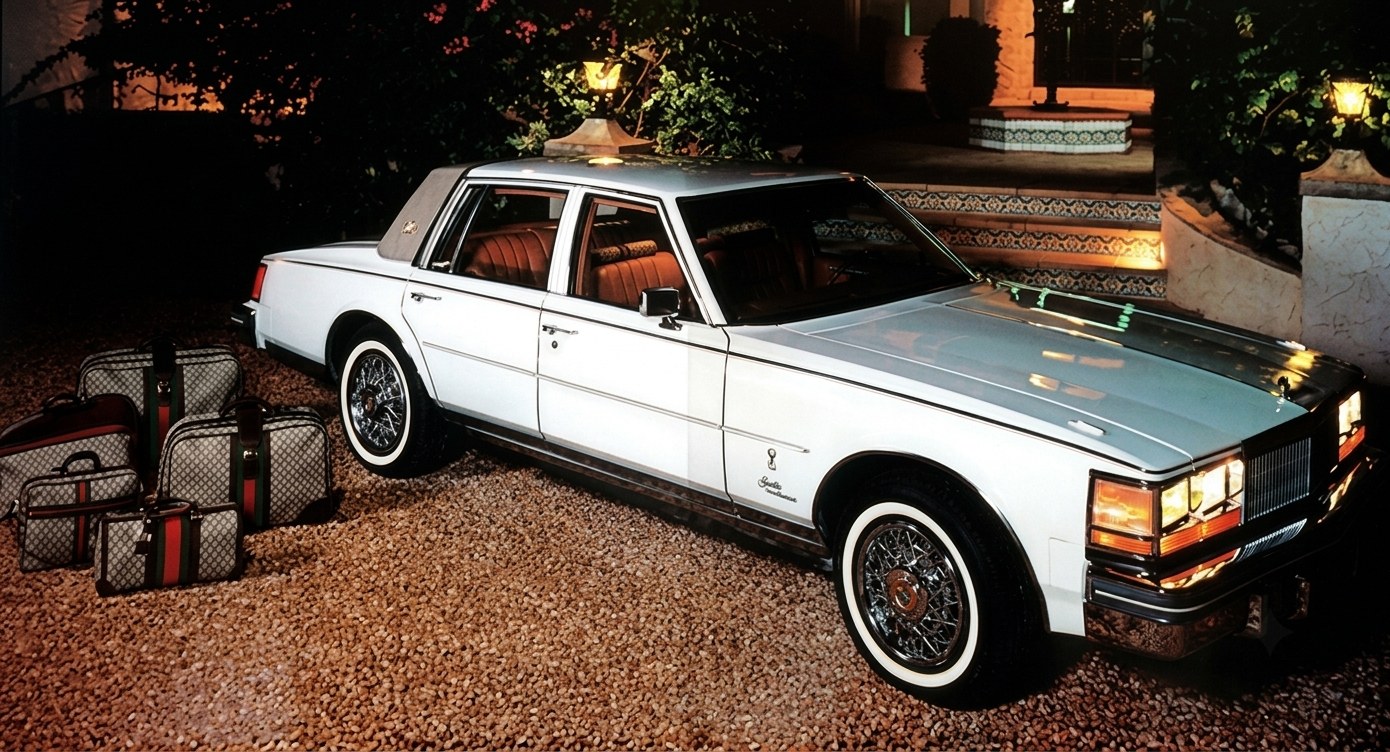
In the late 1970s, Gucci teamed up with Cadillac to create a special version of the Cadillac Seville, transforming an already luxurious American sedan into something that looked as though it had escaped from a fashion show in Milan and landed in Miami.
And no, despite some modern descriptions suggesting otherwise, this was not a factory-built Cadillac station wagon. The famous Gucci car was based on the Cadillac Seville sedan, with the customization carried out by International Automotive Design (I.A.D.) in Miami and sold through Braman Cadillac.
Aldo Gucci Wanted a Cadillac With More Attitude
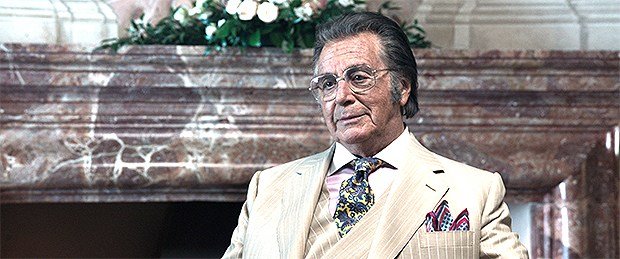
The idea came from Aldo Gucci, one of the sons of Gucci founder Guccio Gucci and one of the key figures behind the brand’s expansion in the United States.
Gucci had already entered the automotive world earlier through its collaboration with American Motors on the AMC Hornet Sportabout Gucci Edition. That project helped establish the idea that a fashion house could turn a conventional car into a luxury lifestyle product.
For the Cadillac project, Aldo Gucci reportedly saw the Seville as the perfect American luxury canvas. The first Gucci Sevilles were unveiled in Miami in September 1978, with the transformation handled by I.A.D. rather than Cadillac’s regular production line.
In other words, this wasn’t simply a Cadillac with a Gucci badge slapped onto it.
It was a proper coachbuilt-style conversion.
Gucci Took Over the Cabin
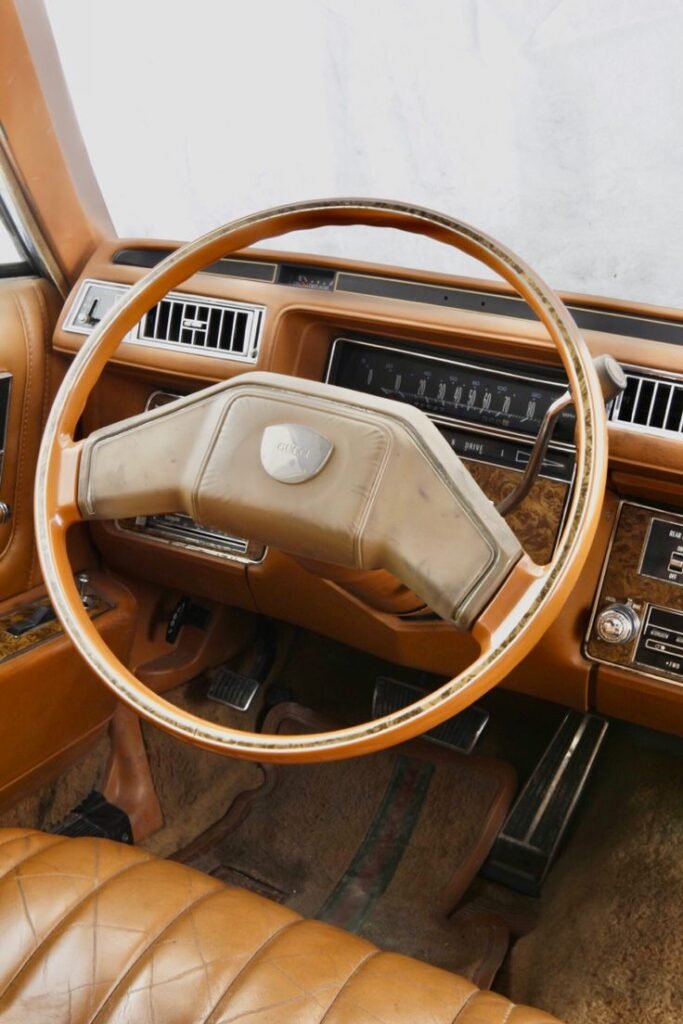
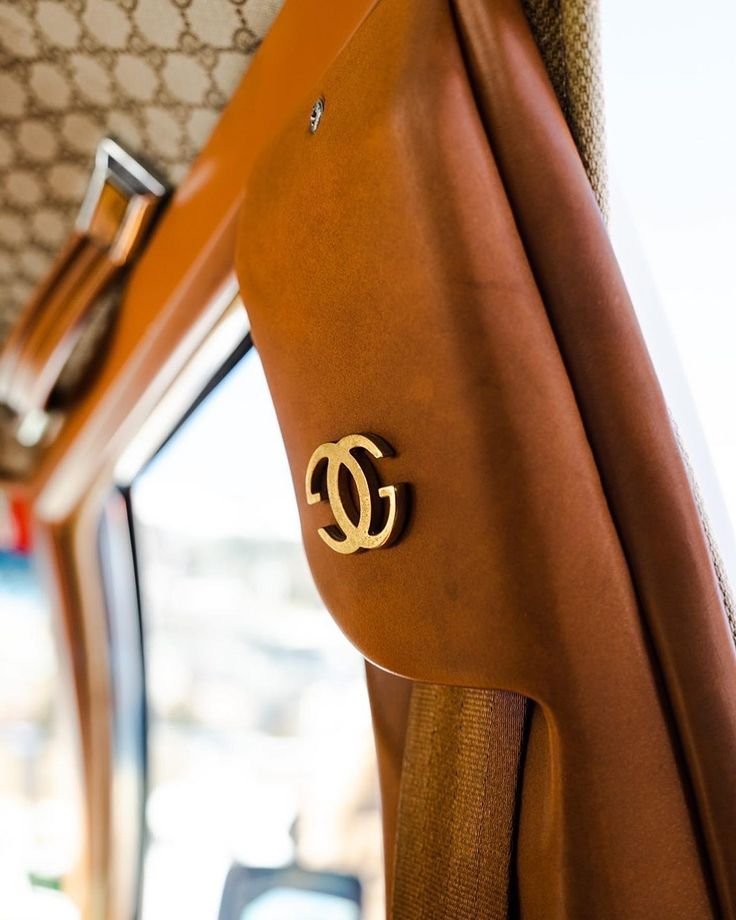
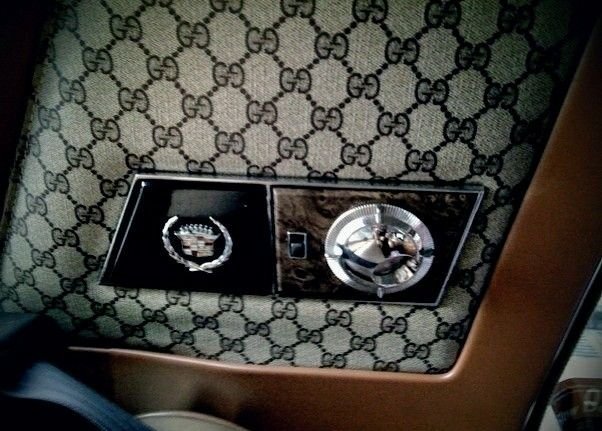
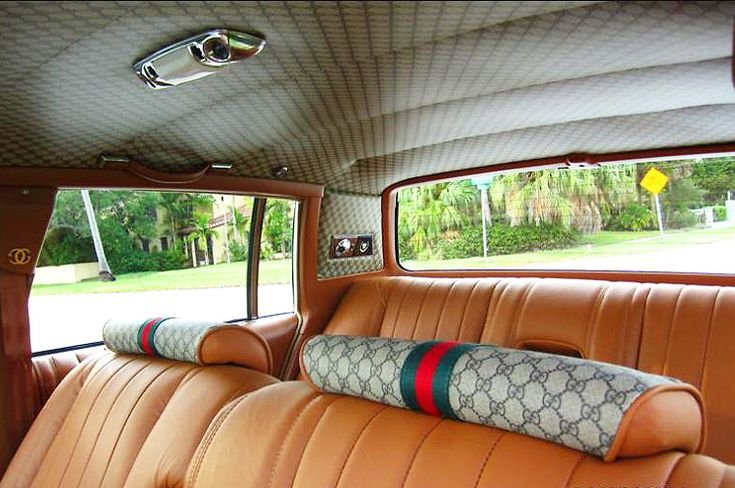
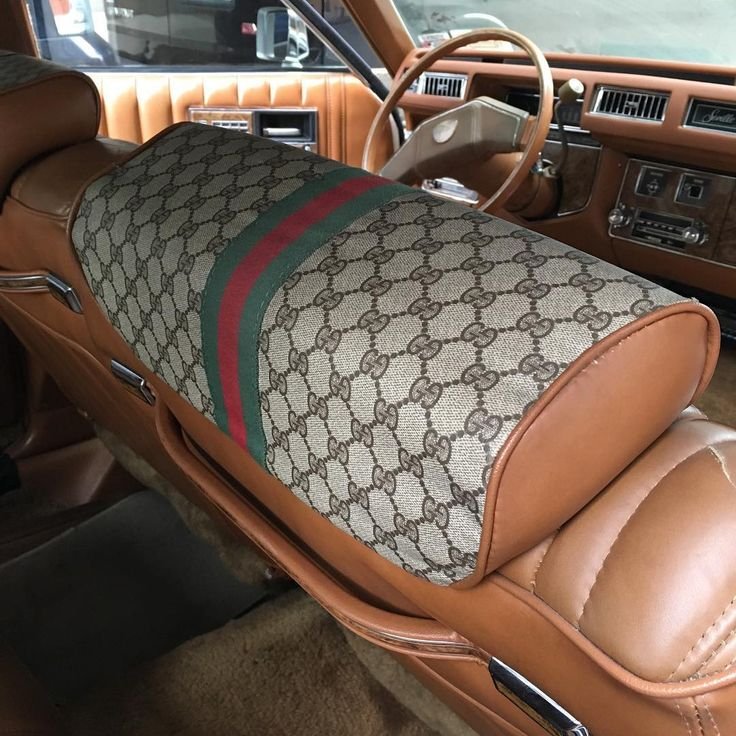
The interior is where things became properly extravagant.
The seats were trimmed in saddle-colored leather and decorated with Gucci’s distinctive double-G monogram fabric. The company’s famous green-red-green web stripe appeared across the upholstery and other interior details, while Gucci branding was incorporated into the dashboard and steering wheel.
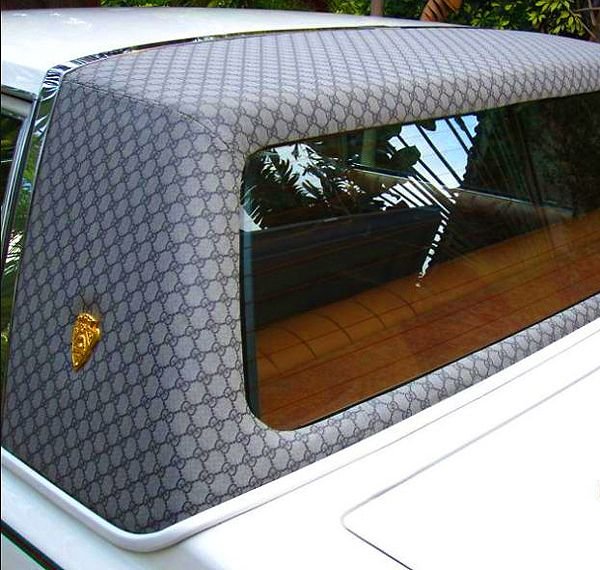
The same theme continued overhead, with Gucci-patterned material used on the roof area.
For a 1970s Cadillac buyer, this was about as subtle as wearing a Gucci suit, Gucci shoes and carrying a Gucci suitcase into the same restaurant.
And that was exactly the point.
Gold Gucci Badges Instead of Cadillac Emblems
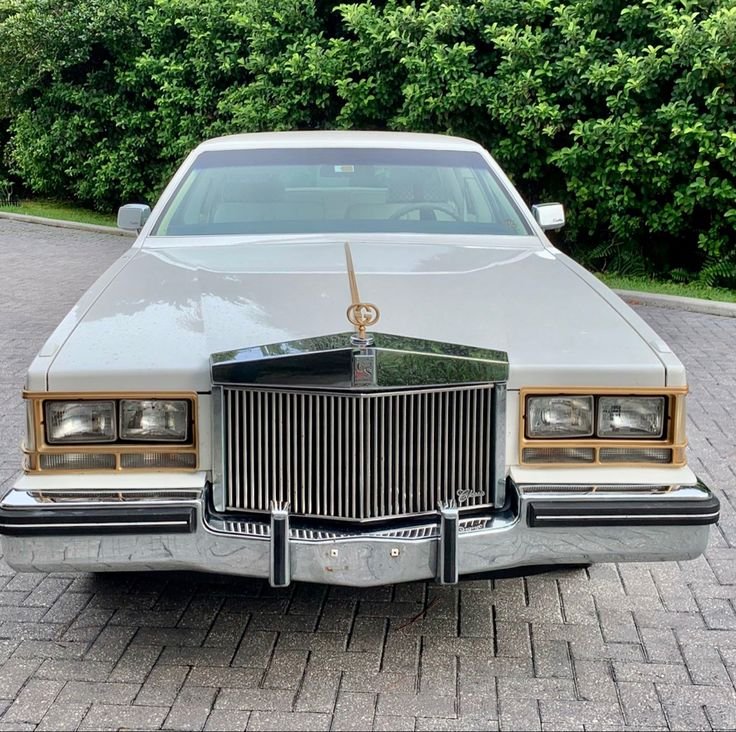
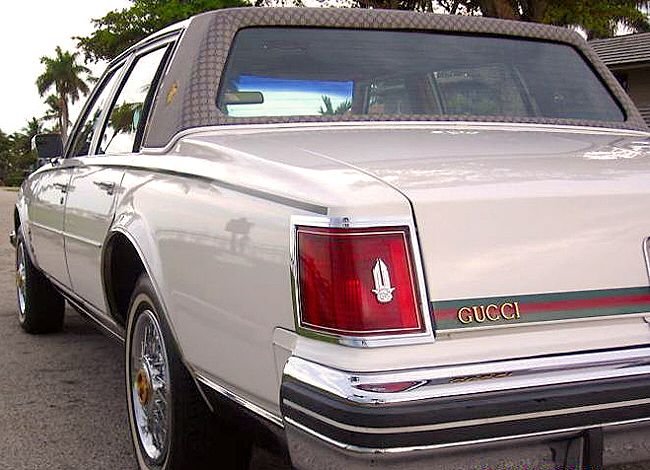
The exterior received an equally outrageous treatment.
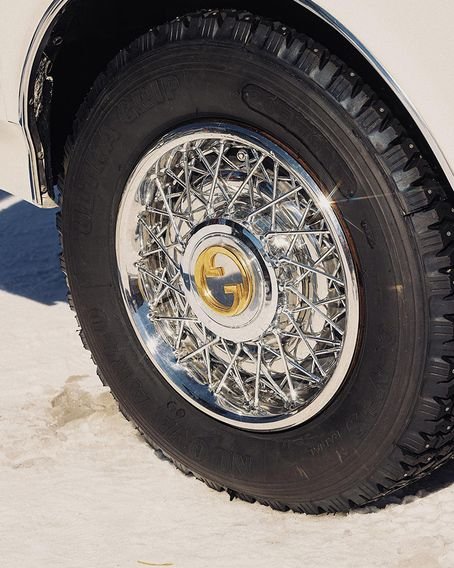
Gucci styling details included the famous red-and-green stripe, Gucci logos on the wheels and a spectacular double-G hood ornament. Some of the standard Cadillac emblems were replaced by Gucci badges, including gold-plated elements intended to make the car unmistakably different from a regular Seville.
The cars were offered in elegant shades including white, black and brown, with some examples featuring contrasting roof treatments that incorporated Gucci’s monogram pattern.
It was the sort of car that didn’t merely arrive somewhere.
It announced itself.
Even the Luggage Was Gucci
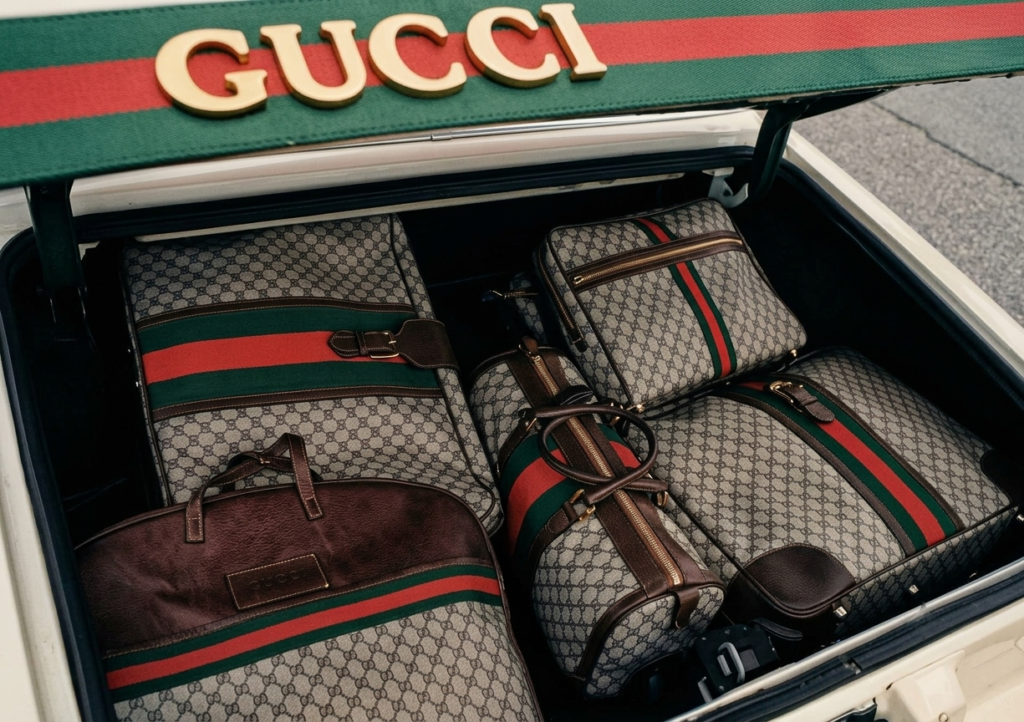
Because apparently a Gucci Cadillac wasn’t quite excessive enough, buyers also received a matching set of fitted Gucci luggage, designed to fit neatly into the car.
The luggage wasn’t an afterthought. It was part of the experience, turning the Seville into a complete luxury-travel package rather than simply a fashion-themed automobile.
That detail says a lot about the philosophy behind the project. Gucci wasn’t just selling a car with fashion accessories. It was selling an entire lifestyle.
Not a Mass-Production Cadillac
This is perhaps the most important detail about the Seville by Gucci.
The car was not a regular Cadillac production model available across the company’s normal dealer network. Production involved specially ordered Seville sedans being sent to the Miami-based I.A.D. operation for conversion before being marketed through Braman Cadillac.
Some specialist sources put production at around 25 examples, making surviving cars exceptionally rare today. The Hellenic Motor Museum, for example, lists its 1979 example as one of 25 produced.
That rarity has transformed the Seville by Gucci from an eccentric 1970s luxury car into a genuine collector curiosity.
The Original Fashion-Forward Luxury Car?
Today, collaborations between luxury carmakers and fashion brands are almost normal. We have seen everything from designer interiors to limited-edition supercars and entire collections built around fashion labels.
But the Cadillac Seville by Gucci arrived decades earlier.
It combined American V8 luxury, Italian fashion, coachbuilding and extravagant personalisation at a time when none of that was remotely mainstream.
And that is what makes this Cadillac so fascinating.
It wasn’t trying to be sporty. It wasn’t trying to be discreet. It certainly wasn’t trying to blend into traffic.
It was a giant American luxury sedan wearing Gucci like it meant it.
And frankly, that is very, very 1970s.
What do you think ? Would you take a rare Cadillac Seville by Gucci over a conventional luxury car from the same era, or is putting a fashion house’s logo all over a Cadillac simply too much? Let us know what you think in the comments.

Adhe is part of the 88 Eight Box Editorial Team, covering JDM culture, motorsport, automotive technology, and industry news. The team focuses on delivering original automotive stories, reviews, and insights for enthusiasts worldwide.